

02 Mar 2026: Practice the Pause: Jesus’ Contemplative Practice, New Brain Science, and What It Means to Be Fully Human – Book Review
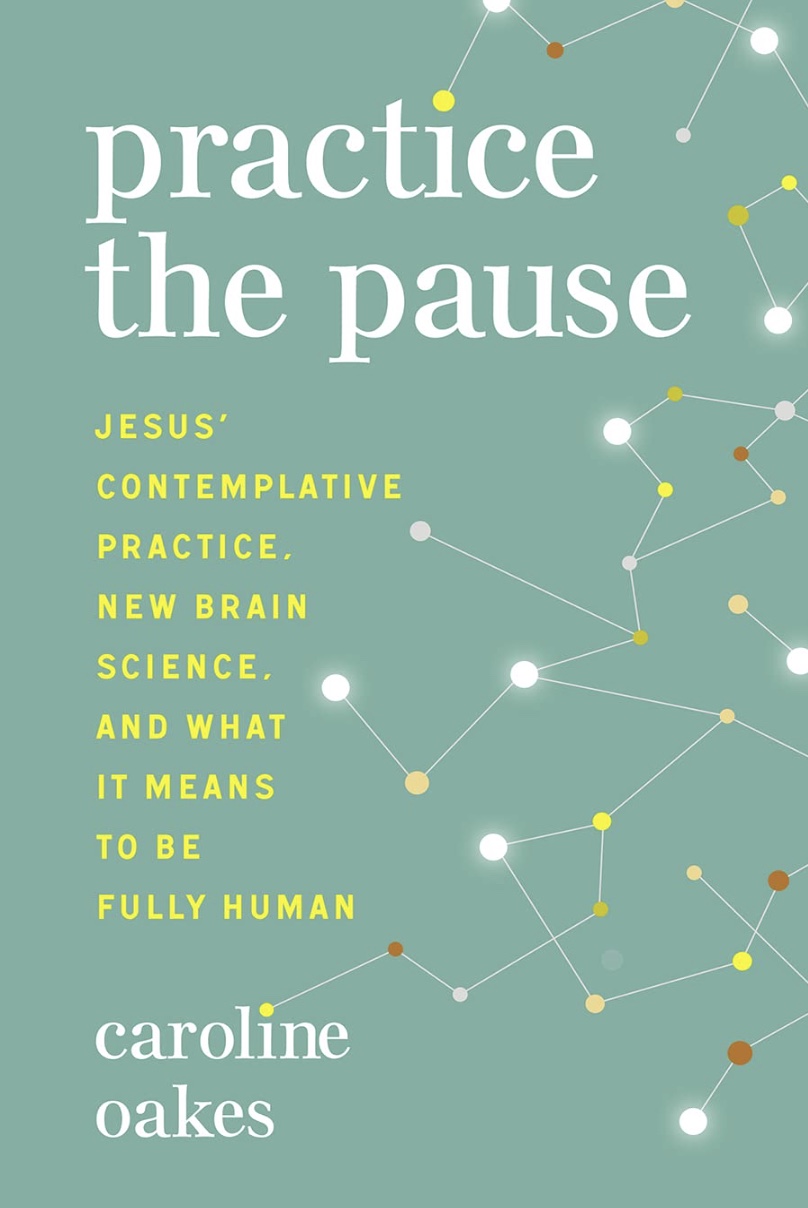
Practice the Pause: Jesus’ Contemplative Practice, New Brain Science, and What It Means to Be Fully Human
Caroline Oakes
Broadleaf Books, 2023. 310 pp.
Reviewed by Gordon Creamer, Creator of the Mission Bridge, Program Director at Well for the Journey
Practicing a contemplative pause in our daily lives can actually be more impactful than most of us realize as it relates to our overall physical well-being and spiritual flourishing. In her 2023 groundbreaking work entitled, Practice the Pause: Jesus’s Contemplative Practice, New Brain Science, and What It Means to Be Fully Human, author and spiritual director Caroline Oakes examines the transformative influence that embodying contemplation more can have upon humanity. While she explores contemporary neuroscience research that highlights this intersection, she grounds it primarily in a re-envisioned perspective of the person of Jesus, specifically what his own contemplative practices might have been as he ventured off time and again in the Gospels to pray. Within the Way of Jesus and embedded in the ancient wisdom teachings of the Buddha and Rumi among others, Oakes asserts that people existing in this millennia can source examples for living with a more “inclusive awareness…able to respond to life’s rigor and challenges from a place of deep wisdom and divine indwelling.”[1] Ultimately, this flows from living more contemplatively, in her argument, which distinctively provides myriad benefits for individuals, including the opportunity for deeper spiritual awakening and the embodiment of being fully human.
As practitioners have long labored to demonstrate areas of convergence between theology and science, Practice the Pause offers readers of diverse religious and spiritual backgrounds a practical window into how faith and culture can engage with one another. Articulated another way, this text enlightens its readers by recognizing the quantifiable ways in which the body, mind, and spirit do affect each other in metamorphic ways. For example, as Oakes asserts, recent developments in brain science have substantiated that a practice of intentionally pausing for even a few minutes of meditation, prayer, or other contemplative acts causes a neurological rewiring of the human brain. Not only does this usher in a calmer, less-reactive way of responding in numerous lifespan situations, but it can reveal the numinous picture of what is actually unfolding before us and within us.”[2]
The author conveys the compelling touchstones of her argument succinctly in the Introduction to her book. Then, she unpacks it across four subsequent sections more extensively, each involving a dimension of awakening, both for the person of Jesus and any human being who desires to experience reality in such an expansive way. The chapters which comprise the “Awakening in the Wisdom Tradition” section depict the how and what Jesus did when he practiced the pause. Ancient Jewish prayers such as the Shema and Amidah are examined here along with Kavanah, a meditative pointing of the heart towards heaven [God].”[3] Additionally describing other contemplative pauses that Jesus would have engaged in, Oakes deliberately connects these intentional practices with his personal awakening to God’s presence, both within himself and all of Creation. Altogether, she affirms that a “growing number of people from all traditions are coming to realize that Jesus himself exemplifies what it is to be an engaged and active contemplative in a demanding and complex world.”[4]
Oakes then bridges the critical gap between what was possible for Jesus to what is also possible for humanity in experiencing such an awakening to God and living fully within that identity. In the final section, “Awakening Our Innermost Self,” she outlines a variety of contemplative practices that twenty-first century seekers can immerse themselves in which reveal the same divine essence. On the human plane, this becomes crystallized when a person encounters stress or a crisis, and instead of reacting with fight or flight from an enlarged amygdala, they instead express compassion, mercy, and unconditional love. This is the process of theosis that Jesus experienced, claims Oakes, because of his contemplative life and faithfulness to practicing the pause.[5] In light of contemporary brain science, this is how Jesus engaged in self-neuroplasticity and empowers us to do the same.[6]
A significant strength of this text is its emphasis on the nuanced way Jesus is perceived within Eastern Christianity, an approach that reverently values him as the Incarnation of God’s wisdom more so than the ultimate instrument of God’s salvation. Oakes continuously encourages readers to increase their understanding of this facet of Jesus’ humanity. Accordingly, she contends that as “we take a slightly more Eastern view of Jesus here in Practice the Pause, and focus particularly on Jesus’ transformative centering pause practice, I can almost hear Jesus saying, ‘Yes, now do you see? This is the way to reconnect, to realign, and to remember your innermost self in God. This is the way to wake up and realize that we each embody God’s radically inclusive, self-giving Love.’”[7] This has powerful implications for anyone seeking spiritual intimacy and deeper connection with oneself, others, and ultimately God.
Overall, Caroline Oakes offers contemporary audiences an inspiring perspective on the contemplative life of Jesus while lifting up the vital impact that such consistent, intentional pauses can have upon human beings within the crux of their individual struggles and the pressing demands of modern life. With creativity and an organized structure, Practice the Pause provides any reader with ample opportunities to learn about the life-giving intersection of spiritual contemplation and neuroscience as it flows from God’s gift of wisdom. This gift, manifested in Jesus and revealed to him through his practice, can dynamically rewire the human brain and redirect its neighboring heart towards necessary spiritual awakening.
This book is also more than a must-read text on the cutting edges of spirituality and science. Its invitational style, inclusion or personal stories, and re-imagining of Jesus’s times in prayer contributes to a more expansive perspective on the humanity of Jesus, which is often lost or neglected in light of his divine nature. Oakes has composed these words with her own curious and contemplative heart, which welcomes any reader to embark on their personal, unique journey of awakening. Whether led to engage in lectio divina, breathwork, or some of Jesus’ ancient Jewish practices, those experiencing this book can take courage to further develop their own contemplative lifestyle. Not only for the shrinking of their amygdala and the increasing of their brain’s neuroplasticity, but also for the widening recognition of God’s indwelling presence and their respective call to become fully human, ergo divine.
[1] Caroline. Oakes, Practice the Pause: Jesus’s Contemplative Practice, New Brain Science, and What It Means to Be Fully Human (Minneapolis: Broadleaf Books, 2023), xxii-xxiii.
[2] Oakes, 57.
[3] Oakes, 94-98.
[4] Oakes, xxi.
[5] Oakes, 132, 268.
[6] Oakes, 78
[7] Oakes, xxi.